Autonomous Drones and Methane Sensors in Extreme Conditions: Skeyetech’s Contribution to the European Scientific Project MISO
In 2025, as part of the European scientific project and observation platform MISO, a Skeyetech autonomous drone system developed by Azur Drones was deployed to support greenhouse gas monitoring in some of the most remote and hard-to-access environments in the Arctic. This scientific mission, in which we took part, illustrates the growing role of autonomous drones and advanced sensor technologies in the study of climate dynamics—particularly in Arctic regions and wetlands, where methane emissions linked to permafrost thaw represent a major scientific challenge.
The european MISO PLATFORM
NILU, the Norwegian Institute for Air Research, coordinates the MISO project within a European scientific programme focused on improving the understanding of environmental processes related to greenhouse gases. It relies on the MISO observation platform (Multi-scale In Situ Observation platform), funded by the Horizon Europe programm, whose objective is to provide reliable and comparable data from field observations.
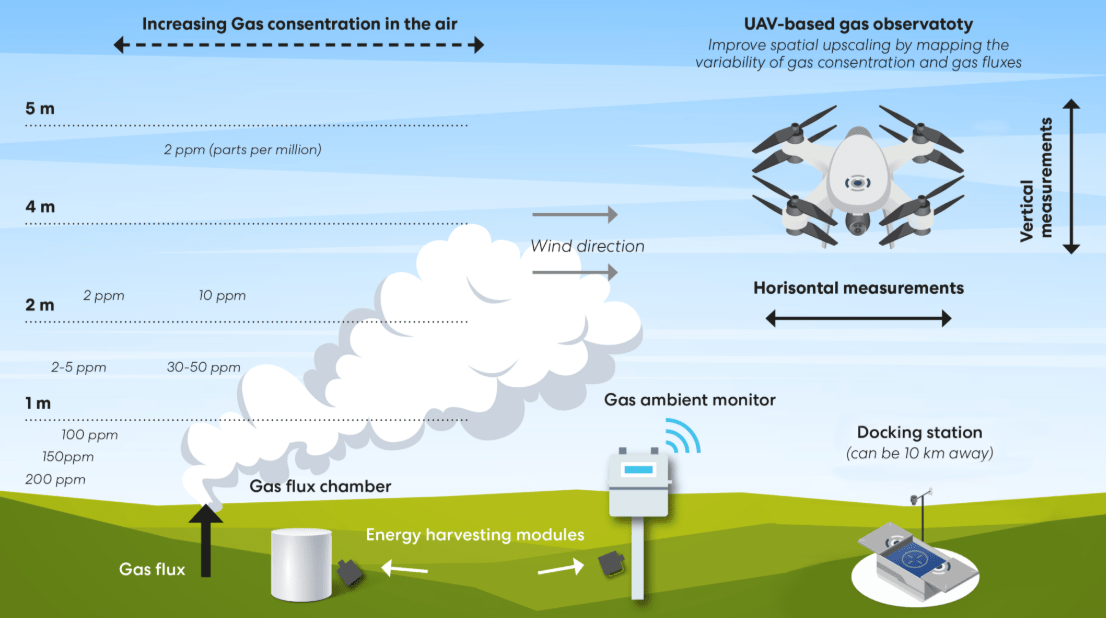
MISO combines several complementary approaches—ground-based sensors, flux chambers, ambient gas monitors, and aerial platforms—to better characterise methane (CH₄) and carbon dioxide (CO₂) fluxes. These in situ observations are essential to strengthen the interpretation of satellite data and to improve large-scale climate models.
Skeyetech: An Autonomous Drone Platform Serving Scientific Research
Designed and developed by Azur Drones, the Skeyetech system is an autonomous drone-in-a-box solution initially intended for continuous surveillance missions using various sensors, including thermal and optical cameras. Within the framework of the NILU project, our solution was adapted for scientific use by integrating a methane gas detection payload and communication capabilities suitable for isolated environments.
The deployment of Skeyetech as part of the MISO project mobilised all of Azur Drones’ areas of expertise: network engineering for LoRa communications, aviation regulation for operations in Finland and Norway, design office and mechanical engineering for sensor integration, as well as project management, logistics, and field deployment teams. This multidisciplinary approach made it possible to conduct the campaign in remote and highly constrained environments, particularly in the Arctic.
Environmental and Operational Constraints IN EXTREME CONDITIONS
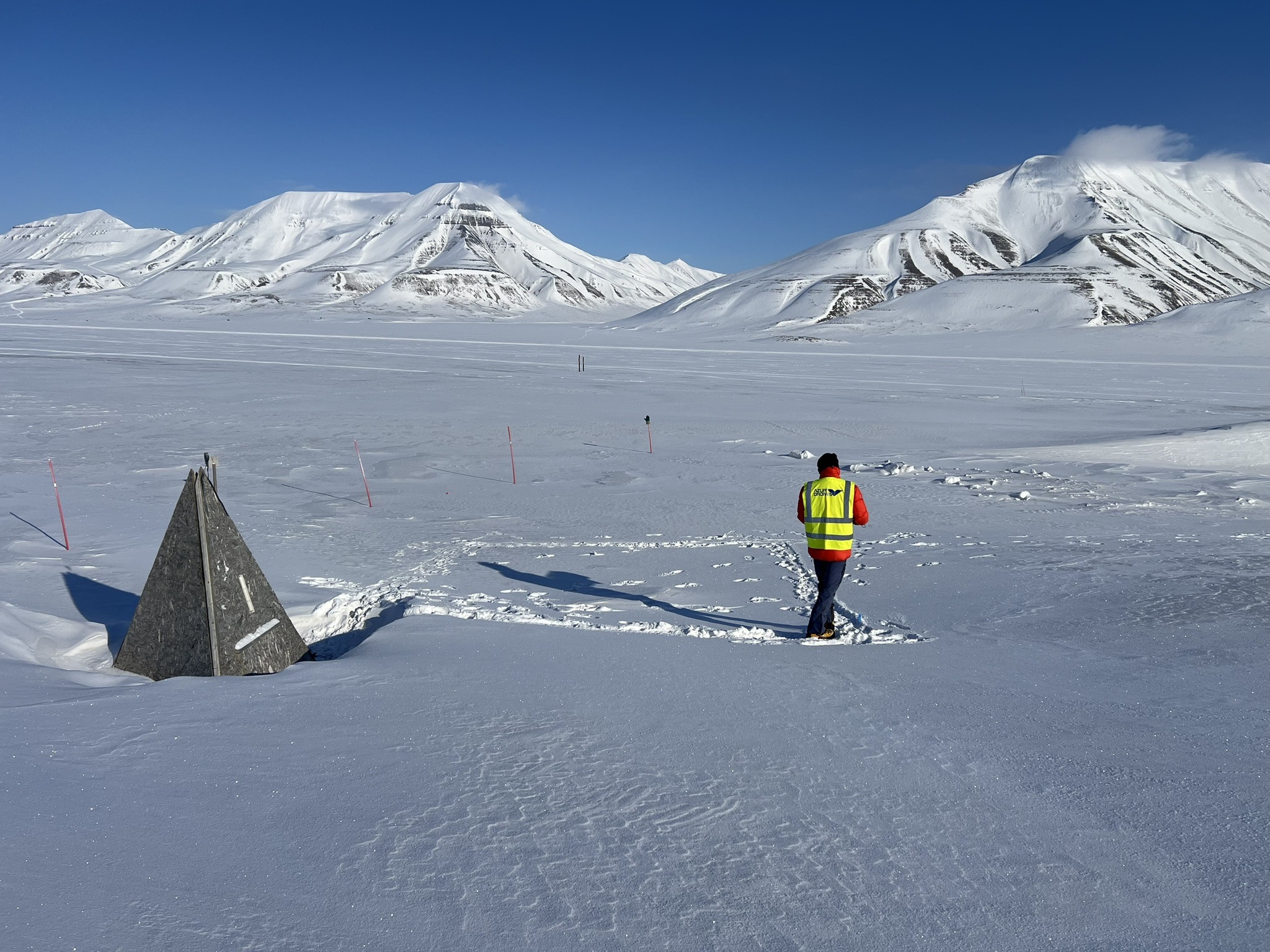
The environments targeted by the project—boreal wetlands and Arctic regions—present significant constraints: sub-zero temperatures, strong winds, high humidity, geographic isolation, and limited communication capabilities. In Svalbard, for example, the team conducted operations at temperatures as low as –5 °C, with wind chill values close to –15 °C.
The Skeyetech system is designed to operate reliably between –15 °C and +50 °C, with IP53 protection ensured by an integrated climate control system within the station. This operational robustness was a critical prerequisite for supporting long-duration scientific campaigns under such conditions.
A Three-Phase Campaign
November 2024: Sensor Integration and Initial Testing in France
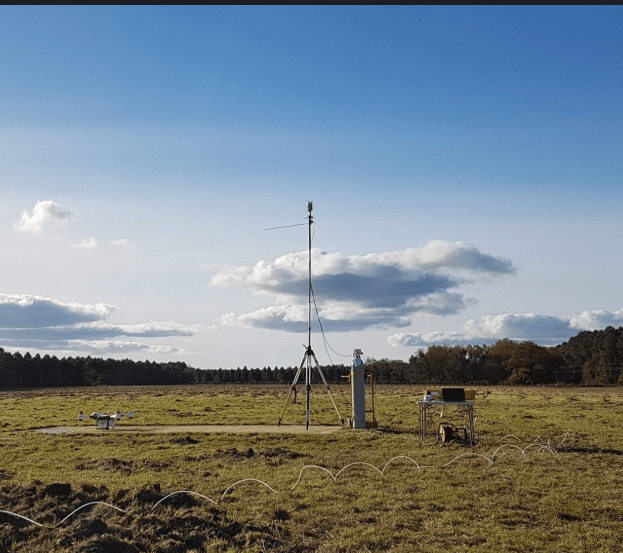
The first phase of the campaign took place in late 2024 at the flight test site near Bordeaux. This stage enabled the first real-world field tests of the MISO observation system embedded on the drone, prior to deployments in wetland and Arctic environments.
We equipped our Skeyetech drone with gas sensors based on NDIR (Non-Dispersive Infrared) technology, including two onboard devices: a sensor developed by NILU (LCS2) and a sensor provided by Senseair (LCS1). The tests confirmed the simultaneous operation of both sensors in both manual and autonomous flight modes.
Using an artificial methane (CH₄) source, the tests demonstrated the sensors’ ability to effectively detect methane during flight. In addition, the team validated the drone’s onboard firmware for real-time acquisition, logging, and transmission of data from both sensors.
This phase also made it possible to integrate and adapt the LoRa communication chain, including a specific protocol change to meet the requirements for long-range, low-power data transmission in areas without infrastructure. Overall, these tests validated the technical architecture of the MISO system before campaigns in natural environments.
September 2025: Wetland Testing in Finland
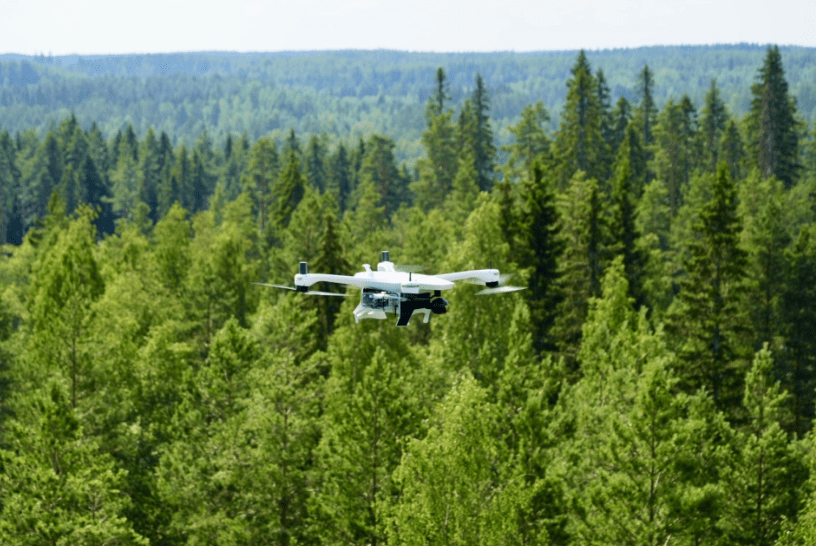
The second phase took place at the Hyytiälä forestry research station in Finland, a wetland environment internationally recognised for research on forest ecosystems and atmospheric sciences. Over the course of one month, scientists used the Skeyetech system to measure methane emissions under natural conditions.
This campaign enabled comparisons between drone-based measurements and reference instruments, testing of ground-based flux chambers, and vertical profiling of greenhouse gases using the drone. It represented a key step in the scientific validation of the system prior to its Arctic deployment.
October 2025: Arctic Deployment in Svalbard
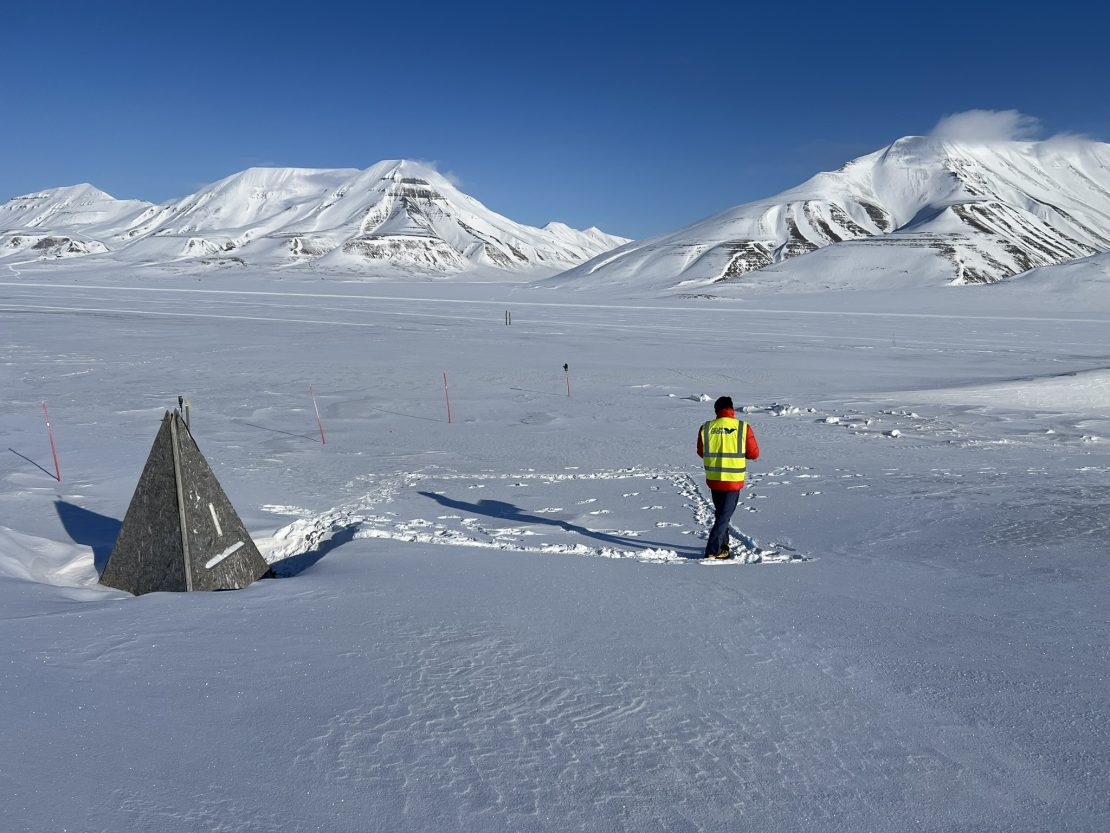
The third and final phase of the campaign took place in Svalbard, in the Arctic. It represented a major logistical challenge for Azur Drones’ teams, involving the transport, installation, and commissioning of a Skeyetech station weighing over 400 kg in a remote area.
This phase included operational preparation of the drone, validation of flight procedures in Arctic conditions (GPS calibration, magnetic disturbances, definition of flight zones), and the deployment of communication systems. The scientific flights, designed to support European research teams, aim to map methane and CO₂ concentrations in areas sensitive to permafrost thaw.
Key Technologies: Gas Sensors and LoRa Communication
Methane and Greenhouse Gas Measurement
The deployed system relies on the use of a prototype Senseair K96 methane sensor, capable of providing real-time measurements of CH₄ concentrations. These data contribute to the identification of emission hotspots and to improving the spatial “upscaling” of greenhouse gas variability.
Integrating these sensors onto an autonomous drone platform significantly extends the spatial coverage of measurements, while maintaining strong consistency with ground-based observations.
Low-Power LoRa Communication in Infrastructure-Free Areas
Data transmission is a central challenge in environments without infrastructure. Within the MISO project, the team deployed an end-to-end LoRa architecture that allows the drone to serve as a mobile relay between remote static sensors and data storage systems.
This low-power approach is particularly well suited to long-term deployments. In addition, the project team tested Wi-Fi for high-throughput transfers and 4G as a backup channel to reinforce system robustness and redundancy.
Azur Drones’ Contribution to Science
Through this mission, Azur Drones contributed its expertise in autonomous platforms, sensor integration, and operational deployment in extreme conditions. Adapting Skeyetech for scientific use, managing Arctic logistics, and supporting research teams illustrate how autonomous drones can make a tangible contribution to environmental sciences.
This collaboration reflects a Drone for Good approach, where technology actively supports the understanding of climate change.
Towards a More Robust In Situ Methane Observatory
In 2025, the MISO project advanced in situ and drone-based greenhouse gas monitoring by turning technological innovations into field-proven solutions. Campaigns conducted in temperate, wetland, and Arctic environments strengthen the foundations of an in situ methane observatory capable of delivering reliable long-term data.
By combining ground-based sensors, autonomous aerial platforms, and low-power communications, NILU and its partners have contributed to a better understanding of methane emissions linked to permafrost thaw—and, more broadly, to global climate dynamics.